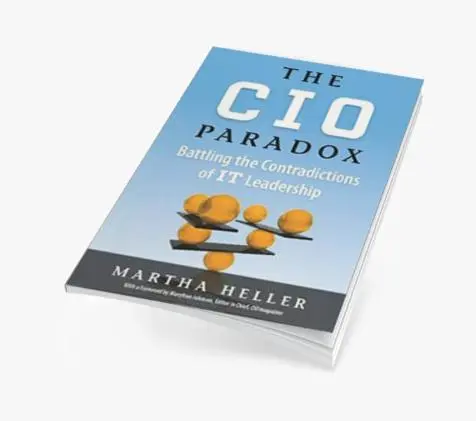
Regardless of industry, most major companies are becoming technology companies. The successful management of information has become so critical to a company's goals, that in many ways, now is the age of the CIO. Yet IT executives are besieged by a host of contradictions: bad technology can bring a company to its knees, but corporate boards rarely employ CIOs; CIOs must keep costs down at the very same time that they drive innovation. CIOs are focused on the future, while they are tethered by technology decisions made in the past. These contradictions form what Martha Heller calls The CIO Paradox, a set of conflicting forces that are deeply embedded in governance, staffing, executive expectations, and even corporate culture. Heller, who has spent more than 12 years working with the CIO community, offers guidance to CIOs on how to attack, reverse, or neutralize the paradoxical elements of the CIO role. Through interviews with a wide array of successful CIOs, The CIO Paradox helps readers level the playing field for IT success and get one step closer to bringing maximum value to their companies.
BOOK SUMMARY
The book identifies the fundamental paradoxes of the CIO role: technology versus business, innovation versus stability, cost versus value, and past versus future. Heller explores how these tensions show up in governance, staffing, executive expectations and corporate culture. Through interviews with successful CIOs across industries, she offers concrete strategies for aligning IT with business objectives, communicating value in terms the CEO and the board understand, managing digital transformation, developing technology talent, and navigating the complexity of far-reaching technology decisions. The book argues that recognising and embracing these paradoxes, rather than ignoring them, is key to succeeding in IT leadership.
I recommend The CIO Paradox because it addresses a reality most management literature ignores: technology leadership is inherently contradictory. Martha Heller does not offer simple solutions or checklists; she honestly acknowledges that CIOs must live permanently with irreconcilable tensions and develop a sophisticated political and strategic intelligence to navigate them.
Her perspective on earning credibility in the C-suite is especially valuable. It is not about asking for "a seat at the table" or complaining about the lack of attention; it is about demonstrating consistent strategic value, month after month, until your presence in executive decisions becomes indispensable. Heller documents real cases of CIOs who made that transition and draws out patterns others can apply.
Her insight into communicating with boards of directors is practical and immediately applicable. Most directors lack deep technological literacy, but that does not mean you should dumb down your message. Heller teaches how to translate technology risks and opportunities into the business language directors understand: return on investment, regulatory risk, sustainable competitive advantage.
For technical leaders aspiring to executive roles, or current CIOs who feel that "nothing is ever enough", this book validates their unique challenges and offers proven tactics for managing ambiguity. It is a survival manual for one of the most complex roles in the modern company.
Reading is the beginning. Applying is the leap.
At Scalabl you don't stop at the summary: you take the best business ideas to your own venture. Our flagship Entrepreneurship & Innovation Course: 10 years running, graduates in 50+ countries, 12 modules at your own pace.