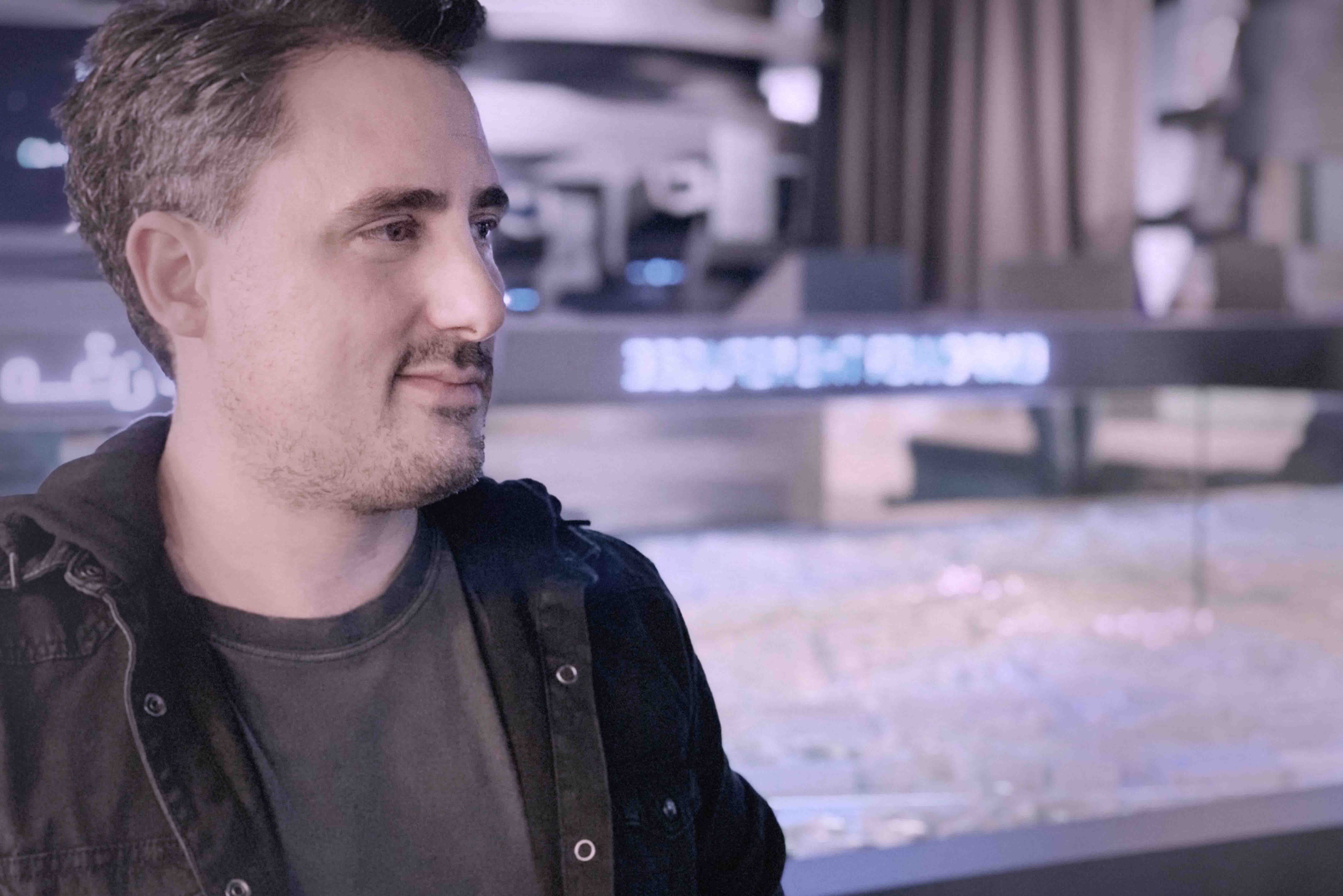
Francisco Santolo (CNBA graduate, class of 2001) made his endeavor to teach others how to undertake. After studying economics and completing some innovative business programs at Harvard, Stanford, and MIT, among others, he left the field. his corporate career and in 2016 he launched with Scalabl, its startup accelerator. Today it operates in more than 20 countries with an international community of more than 1,500 entrepreneurs.
In this interview he talks to us about post-pandemic digital nomadism, the changes in education and how the word “networking” it changed him life.
What is it like to work nomadically and what did they do at Scalabl when the pandemic prevented them from working? travel?
Since 2018 I have lived nomadically, moving between the more than 20 countries where we operate with Scalabl. When it started the pandemic, I was left I was stuck in Argentina for several months and now I moved to Panama. In our organization we had been doing live courses, and it just started. Covid, we decided to send everyone home to work, even before the idea was mentioned on a mass level. We didn't fire anyone. We canceled the enormous structure that we had prepared in several countries and converted to online learning. It worked really very good.
Is the pandemic going to be a turning point for remote work?
This pandemic accelerates a future that was quite clear: working without having an office, which brings complications such as fixed costs. We, for example, had a team that was always remote, beyond whether they were together in an office or not. We had 6, 7 or 8 spaces, but they only left if there were meetings, so it was quite simple and natural to send them home. We also have hundreds of graduates from different countries and holding in-person events was always difficult. Now we open zoom and we all meet. Business owners are starting to realize these things.
Actually, the tools were already there, right?
Totally. Google Drive already existed, the possibility of working on live documents, we had several video calling programs... everything was invented, but we were simply not used to using it that way, as a society. Today everything has to be reinvented: people are becoming going to live in the countryside, with the internet, and the economy is going down. becoming more horizontal, more communal and less corporate. It's fun to see what's coming, although as always, each contingency causes some to lose and others to win. You have to reinvent yourself.
How do you define scalability and how did you see that you could make that your venture, your own company?
I spent more than 10 years in a corporate career and worked in a corporate career. 9 years at Natura, a wonderful company. But it was in 2013, when I took a course in the United States, that they told me about networking and it was transformative. I found it Such a powerful concept, that I began to understand it. to go out for coffee per day with friends, acquaintances, and to offer help, to ask “what's wrong? "What can I do for you with what I know?" He did it for free, with the innovative tools he was learning in a Stanford course. And really the effect was multiplier: a friend who wanted to value his company, another acquaintance who wanted to sell his product, and so on. I started. Over time, things worked out, and they offered me a share of those companies so that I could continue helping them periodically. There It was when I realized that I could quit my job and dedicate myself to advising other entrepreneurs. So nation the idea and it materialized I joined Scalabl a few years later, after having another job in Dubai that taught me how to work. a lot.
Why Was networking so transformative?
When you learn to relate to other people, everything begins to happen in an almost magical way. Instead of trying to achieve everything in life alone, you have to understand the purpose of what you do and seek to connect with others, because the other may have what you need and you can offer something that they need. You have to give value to the other, know them.
What Did you learn by studying abroad what is different here?
I didn't feel the academic level was important. that was very different. It is true that in the United States you are taught by those who wrote the books that we read to study. But the main difference is not on the intellectual side. There There is a culture of learning that is very about relationships: the graduate class ends and everyone doesn't go home quickly. There The bell rings and there's a cocktail, it's ready. everything set up so that you have to interact, meet others, weave networks of relationships. Even the teachers relate to the students as equals. There is also a lot of cultural diversity at universities.
You were an entrepreneur from a very young age, when you were still in high school. Tell us something about that. Did the College have any influence on your later career? Do you feel that it helped you? in something having gone to the CNBA?
I feel that the intellectual training at the School and the demands are brutal. It is not to send a boy who does not have emotional support at home, because it can be difficult. I have wonderful memories and companions, plus the experience of being so independent from so early on is immeasurable. very good. For all that, college was easy for me. However, it took me time to start enjoying studying. It was only when I was doing my master's degree and I saw that I could apply all of that to something concrete. Today I study like a maniac.
You have strong training in the areas that are most lacking in schools, such as technology or entrepreneurship. What What do you think is missing in education today?
Simply, transmit the passion for learning. Today, to learn, you almost don't need to go to school, you have everything at your fingertips. Therefore, we must stop requiring students to study by heart. You have to be passionate about learning, be restless and understand that everything is useful. Furthermore, I think they should teach us to relate to others, not to be afraid of the unknown. They have to accompany us in the emotional part.
What What would you recommend to someone 17-18 years old who has an idea to start a business?
I would tell him to “undertake” means “make possible” something. It's not just about setting up a company. Entrepreneurship is not as you usually think, creating an app. You can start by putting together a band, assembling furniture, taking photos, writing poems that are sold online. Kids have passions.
I would also tell them that the degree is not the only thing: that they do a university degree but that they take advantage of that stage as a transition. Nowadays there is outdated content in the university, and it is less and less useful, but if you skip it it is still a risk. So So, I would tell them: don't waste your time, take a short degree if you want and investigate separate courses, dedicate yourself to other hobbies, to “hacking” the system.
Finally, what is your purpose?
Build communities of good people who know that they can achieve what they want without needing many resources, by being connected to people. Respecting the difference, not being violent or harmful. The future that is coming - and young people already see it - has to do with collaboration. Let's dedicate ourselves to taking care of the planet and taking care of ourselves.