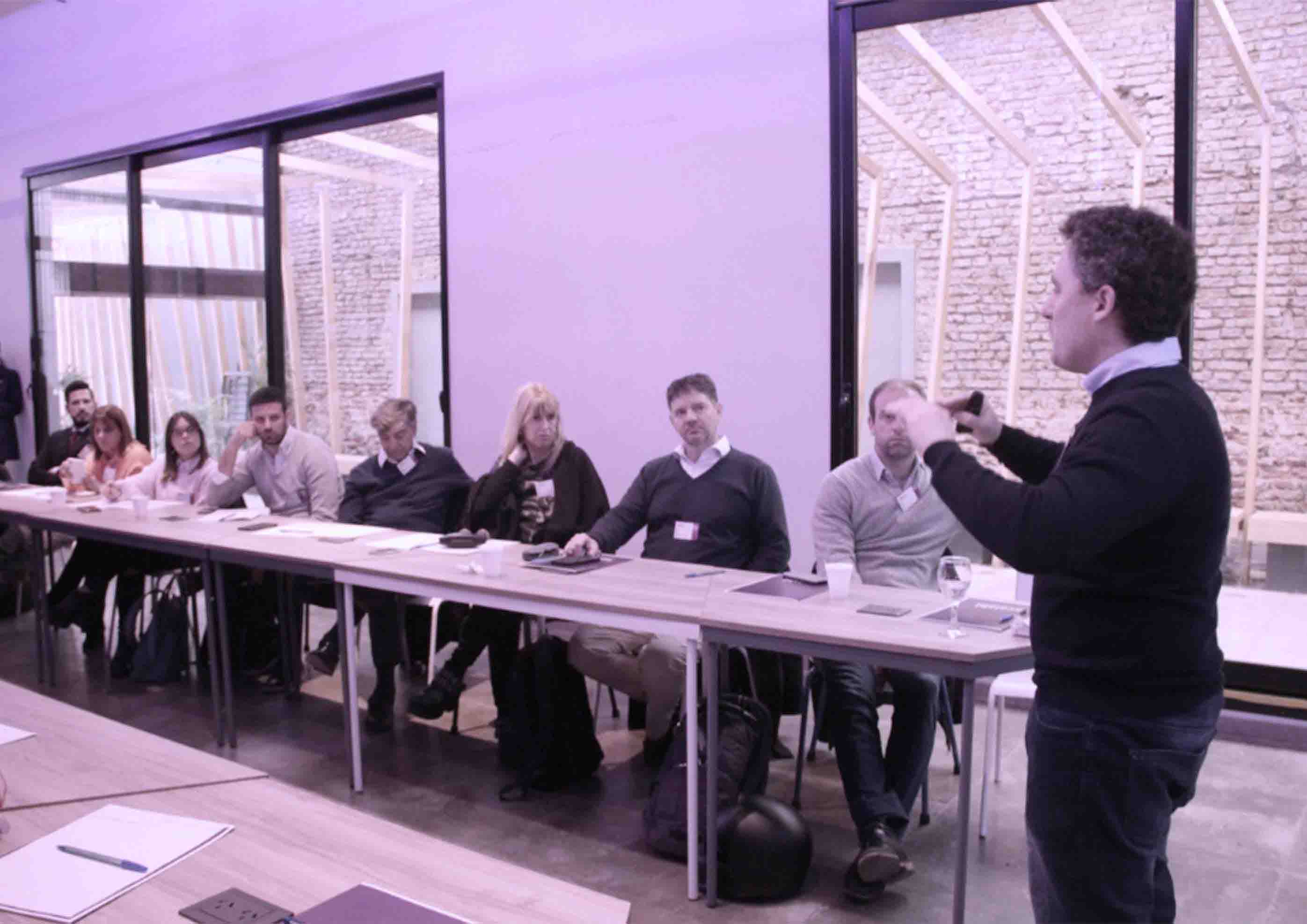
The ability to undertake business becomes essential in a volatile and increasingly uncertain world. It is not Reserved for businessmen, entrepreneurs or intrapreneurs, it is a mentality, a vision of the world and a set of methodologies and powerful tools that we should all have.
Beyond To create companies, entrepreneurship has to do with the ability to make things possible. It is starting from a vision, a purpose, and managing to transform reality, solving problems and designing new ways to generate and capture value. By undertaking, we propose to other people new ways of understanding the world, of interacting and relating.
The ability to innovate, also fundamental, has the component of ideation or creativity, but it necessarily implies execution and implementation. It consists of solving new problems or finding better solutions for existing ones. Indeed, this skill is an inexhaustible source of learning and growth and enables our personal and professional development.
At Scalabl and within the framework of our alliance with the CEMA University, we work to teach these skills, mentality and tools to entrepreneurs and intrapreneurs.
The new methodologies, generated from the beginning of the 2000 by authors such as Steve Blank, Eric Ries, Geoffrey Moore, Jeff Sutherland, Alexander Osterwalder and John Mullins, among others, have professionalized the art of entrepreneurship.
Today you no longer need to have investment or incur great risks to start a business, and there are powerful tools to scale and innovate that complement and in many cases displace the traditional business theory. Large companies must reinvent themselves in an uncertain context and face a latent risk of disruption, with dynamic markets, accelerated growth of new competitors, new business models and a powerful component of digital transformation. The generation of a culture of innovation and the continuous learning of its employees is essential today.
Every year the Forbes Promises show by example that it is possible to generate impact in different industries, creating profitable and scalable businesses, with a focus on people and problem solving.
The promises of this edition work in industries as diverse as personal finance, agriculture and technology, livestock, talent attraction, sleep industry, last mile logistics and orthodontics. In each case, they found a way to generate innovative business models and differentiate themselves, regardless of whether or not they have chosen to leverage a technological base. multinationals. We highlighted the growth of Latin America as an entrepreneurial hub, the opportunity to look at the market regionally and the importance of implementing good innovation practices at the corporate and government level.
Another central theme was the importance of teams. Attracting and training human talent is a challenge for all actors in the ecosystem, including current unicorns and multinational companies. A priority is the need to have people who have a work mentality associated with continuous learning, experimentation and new business methodologies, and who have emotional and relational skills, including resilience and the ability to adapt.
There are no individual achievements independent of interaction with other people. Learning entrepreneurial and innovation skills and tools helps us to do things, to become protagonists, to influence our environment, to be able to work for what we want. I have the privilege of having accompanied more than 2,000 entrepreneurs and businessmen to create and reformulate companies in more than 50 countries, and I still maintain that the entrepreneur who does not read is reading. at a tremendous disadvantage. The future requires us to learn, unlearn and relearn permanently, and embracing that challenge opens a path of great growth.
*The column was written by Francisco Santolo, CEO and founder of Scalabl