
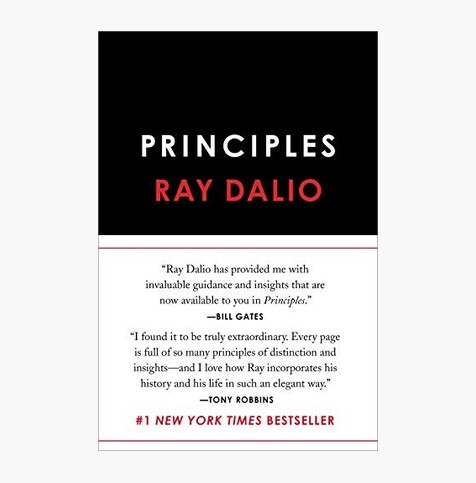
How do the most successful people in the world make decisions? Ray Dalio, founder of Bridgewater Associates (the world's largest hedge fund with $150 billion in assets), documented over 40 years the principles that took him from trading stocks in his apartment to building one of the most influential financial institutions in history. This book isn't theory: it's an operating system for life and work, tested in markets, crises, and managing thousands of people.
"You think something is good because it makes you feel good. Reality is the final arbiter." — Ray Dalio
BOOK SUMMARY
Dalio divides the book into two parts: Life Principles and Work Principles. Both are founded on a radical premise: reality is what it is, not what we wish it to be. Success comes from accepting the truth—even when it hurts—and building systems to navigate it.
Fundamental life principles:
1. Embrace Reality and Deal with It: The desire for things to be different blinds us. Reality is the final arbiter. Develop a love affair with reality as it is, not as you wish it to be.
2. Pain + Reflection = Progress: Pain signals you're at your limit. Most avoid pain; the successful embrace it as a learning opportunity. Every mistake contains a seed of improvement if you're willing to excavate it.
3. Everything is a Machine: The economy, markets, organizations, your life: everything operates as machines with inputs and outputs. If you don't like the outcome, examine the machine and adjust its components.
4. The 5-Step Process for Achieving Goals:
- Set clear goals
- Identify and don't tolerate problems that obstruct those goals
- Diagnose problems to get to their root causes
- Design plans to overcome them
- Execute those plans and continuously evaluate progress
5. Be Radically Open-Minded: We all have "ego barriers" that prevent us from seeing our blind spots. Actively seek opinions from smart people who disagree with you. Truth—not your ego—is what matters.
6. Believability-Weighting: Not all opinions carry equal weight. People with demonstrated track records in a specific area deserve more influence in decisions about that area. Develop a system for evaluating who knows what.
Fundamental work principles:
1. Idea Meritocracy: The best system is where the best ideas win, regardless of who proposes them. Formula: Radical Truth + Radical Transparency + Believability-Weighted Decision Making = Idea Meritocracy.
2. Radical Truth: Brutal honesty about what's working and what isn't. No political filters, no euphemisms. People must be able to say what they really think.
3. Radical Transparency: Record meetings, document decisions, make all information available. If you can't handle truth about your performance, you don't fit at Bridgewater.
4. Thoughtful Disagreement: Conflict is good when seeking truth, not when seeking to win. Foster debates where the best ideas emerge from the clash of divergent perspectives.
5. Culture of "tough love": Pointing out mistakes and weaknesses is the hardest and most valuable type of love. People prefer compliments, but precise criticism is more valuable for growth.
6. People and culture are a two-part machine: People determine culture; culture determines which people thrive. Great organizations have both great people and great cultures.
Additional key concepts:
Principles as operating system: Dalio documented every decision, every success, every failure. Over time, these became "principles"—rules that guide future decisions. A well-formed principle is valid for similar situations in the future.
The "Dot Collector": System developed at Bridgewater where employees rate others' performance in real-time during meetings. Opinions are weighted by believability to arrive at better collective decisions.
The economy as a machine: Dalio developed a model of how the economy actually works (debt, credit, cycles), which predicted the 2008 crisis. This model is available free as the video "How the Economic Machine Works."
WHY I RECOMMEND READING THIS BOOK? By Francisco Santolo
This book is uncomfortable in the best possible way. Dalio doesn't make you feel good; he forces you to confront reality. His radical honesty about his own failures—including nearly bankrupting Bridgewater in 1982 and having to fire all his employees—demonstrates that his principles aren't abstract theory. They're survival tools forged in real crises.
I especially recommend it for the concept of "Believability-Weighting." In a world where everyone opines on everything on social media, Dalio offers an antidote: not all opinions are equal. The person who has made 100 similar decisions successfully deserves more weight than someone who opines without experience. This sounds elitist, but it's pragmatic. Decision quality improves when weighted by track record.
The "Pain + Reflection = Progress" is particularly relevant for entrepreneurs. Failure is inevitable; most avoid it, deny it, or get depressed. Dalio systematizes it: pain is information. Why did it hurt? What principle did I violate? How do I adjust the system so it doesn't happen again? This mindset transforms failure into fuel.
"Radical Transparency" is controversial but revealing. Dalio argues that most organizational problems stem from hidden information, office politics, saying what others want to hear. Recording meetings, documenting everything, making the uncomfortable visible: that's high-performance culture. It's not for everyone; it's for those who prioritize truth over comfort.
For leaders and entrepreneurs building organizations that must make complex decisions under uncertainty, this book is an organizational architecture manual. It's not easy to implement; it requires emotional maturity and culture of trust. But the results—better decisions, accelerated learning, corrected blind spots—are worth the effort.
RELATED BOOKS
"Thinking in Bets" by Annie Duke
The poker champion applies decision-making under uncertainty to the business world. Complements Dalio with specific techniques for evaluating probabilities and avoiding judgment biases.
"The Black Swan" by Nassim Nicholas Taleb
Taleb analyzes low-probability but high-impact events that destroy predictive models. Dalio focuses on repeatable patterns; Taleb on the unpredictable. Together they offer a complete view of risk.
"High Output Management" by Andrew S. Grove
Intel's management manual complements Dalio's principles with specific operational tactics for scaling teams and maintaining productivity in complex organizations.