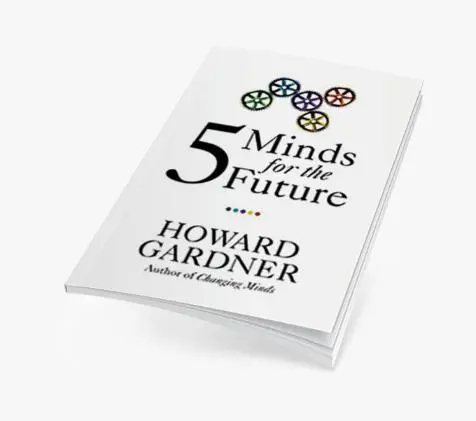
Howard Gardner, creator of the theory of multiple intelligences, identifies the five types of minds that will be indispensable in the future: disciplined, synthesizing, creating, respectful, and ethical. An essential guide for education and leadership in the 21st century.
“In the future, the people who thrive will not be those who accumulate the most information, but those who know how to synthesize it, create with it, and act ethically based on what they know.” — Howard Gardner
BOOK SUMMARY
Howard Gardner proposes that the future will demand five types of minds that must be cultivated in both educational systems and the business world. The disciplined mind masters at least one form of professional thinking and continues learning constantly. The synthesizing mind integrates information from multiple sources and presents it in a comprehensible way. The creating mind goes beyond existing knowledge to generate new ideas and questions. The respectful mind recognizes and values differences among people and groups. And the ethical mind reflects on the nature of one’s own work and the responsibilities that come with being a citizen.
Gardner argues that these five minds do not operate in isolation but interact and reinforce each other. The author uses examples from academic, corporate, and political settings to show how the absence of any of these minds generates negative consequences for both individuals and organizations. The book serves as both a diagnosis of what is missing in current education and a roadmap for developing the cognitive and emotional capabilities that tomorrow’s world will demand.
Gardner is one of the most important thinkers in education, and this book applies his framework to the business world with extraordinary clarity. The five minds he describes—disciplined, synthesizing, creative, respectful, and ethical—are exactly what we need in an era of exponential change. At Scalabl® we constantly emphasize that technical skills are not enough; the ability to synthesize information and think creatively across disciplines is what separates leaders from managers.
What makes this book unique is that it does not remain in theory: it offers a practical framework for evaluating which types of minds we are developing in our teams and which ones we are neglecting. In a world where artificial intelligence can replicate many technical functions, the minds Gardner describes—especially the creative, respectful, and ethical ones—become the true human differentiator. It is essential reading for those who lead teams and want to build organizations prepared for the future.
Reading is the beginning. Applying is the leap.
At Scalabl you don't stop at the summary: you take the best business ideas to your own venture. Our flagship Entrepreneurship & Innovation Course: 10 years running, graduates in 50+ countries, 12 modules at your own pace.