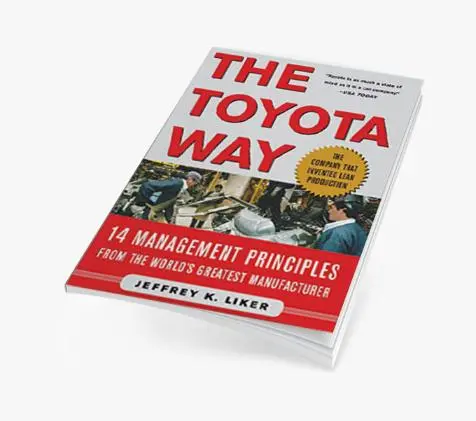
The Toyota Way by Jeffrey Liker is the definitive reference on the most imitated and least understood management system in the world. Liker distilled 20 years of research inside Toyota into 14 principles that explain how a company from a war-devastated country became the most efficient, profitable, and admired manufacturer on the planet. It is not a book about automobiles: it is a book about how to think, manage, and improve any human operation.
“What Toyota did was turn continuous improvement into a habit of every person, in every process, every day. You cannot copy that with tools: you build it with culture.” — Jeffrey Liker
BOOK SUMMARY
Liker organizes Toyota’s 14 principles into four categories forming a pyramid:
Long-term philosophy: Toyota makes decisions based on the long term, even at the expense of immediate financial results. This philosophy of “thinking in generations, not quarters” is the foundation for everything else. While most companies optimize for the next report, Toyota optimizes for the next 50 years.
The right process produces right results: Here the most well-known concepts appear: continuous flow (eliminating waits between steps), pull systems (producing only what the customer needs), production leveling (heijunka), and the famous “stop the line” principle (jidoka) —any worker can halt all production if they detect a defect.
Developing people and partners: Toyota invests years in developing internal leaders who deeply understand the work, respect their people, and teach by example. Suppliers are treated as extensions of the company, not adversaries to be squeezed.
Continuous problem solving: Kaizen (continuous improvement) and genchi genbutsu (“go and see” the problem where it occurs) are Toyota’s essence. Decisions are made by consensus after considering all options (nemawashi), and implementation is fast because everyone is already aligned.
Liker emphasizes that most companies trying to “copy Toyota” fail because they copy tools (kanban, 5S, just-in-time) without adopting the philosophy and culture that give them meaning. Tools without culture are empty techniques.
The Toyota Way is the intellectual grandfather of the entire Lean and Agile movement. Without Toyota, Lean Startup, Scrum, and Design Thinking as we know them would not exist. Reading this book means understanding the roots of the methodologies we use today in the entrepreneurial world.
What impresses me most about Toyota is the obsession with eliminating waste (muda). Not obvious waste, but invisible waste: waiting, overproduction, unnecessary processes, underutilized talent. When one starts seeing the world through those eyes, one discovers that most organizations waste more than half their effort on activities that generate no value for anyone.
I also find the idea that quality is built into the process, not inspected at the end, fundamental. In the entrepreneurial world, this translates to validating while building, not after. It is the same philosophy that Eric Ries later captured in Lean Startup, but Toyota was doing it decades earlier in manufacturing.
It is a dense but essential book. I recommend it to anyone who manages teams, processes, or operations —whether it is a factory, a startup, or a content team. The principles are universal.
Reading is the beginning. Applying is the leap.
At Scalabl you don't stop at the summary: you take the best business ideas to your own venture. Our flagship Entrepreneurship & Innovation Course: 10 years running, graduates in 50+ countries, 12 modules at your own pace.