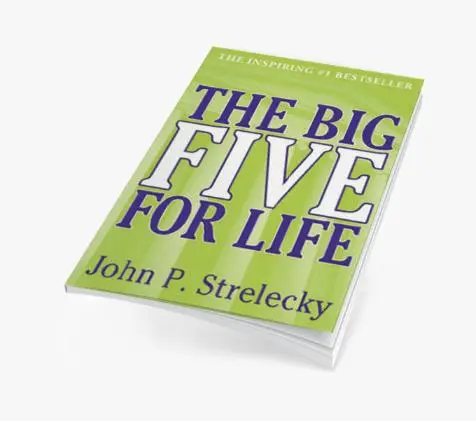
The Big Five for Life by John Strelecky is a business fable that poses the most important question any leader can ask: why am I here? Through the story of Thomas Derale —a CEO whose company achieves extraordinary results because every employee works aligned with their personal purpose— Strelecky demonstrates that the most successful organizations are not those that demand the most from their people, but those that help their people discover what they want to achieve in life and give them a space to do it.
“Everyone has Big Five for Life: the five things they want to see, do, or experience before they die. When a company helps its people fulfill them, loyalty and performance become extraordinary.” — John Strelecky
BOOK SUMMARY
The story follows Joe, an executive who arrives at Thomas Derale’s company and discovers an organizational culture radically different from anything he has known:
PFE (Purpose for Existing): Every person has a purpose for existing —the deep reason they are here. Derale’s company only hires people whose personal PFE aligns with the organization’s PFE. When that alignment exists, there is no need to motivate anyone: motivation is intrinsic.
The Big Five: Inspired by the “Big Five” of the African savanna (lion, elephant, buffalo, leopard, and rhinoceros), the Big Five for Life are the five experiences, achievements, or contributions each person wants to make before they die. Derale has every employee identify theirs and builds the company as a vehicle for fulfilling them.
Leadership as service: Derale does not manage: he serves. His role as a leader is to create conditions for each person to flourish. This means knowing each team member deeply, understanding their dreams, and designing roles where daily work contributes to realizing them.
The museum test: Derale proposes a powerful metaphor: imagine that at the end of your life there is a museum showing everything you did. Would you be proud of what is displayed? Or would there be empty rooms full of things you never dared to do?
The book works as business fiction —it reads easily and quickly— but its impact is profound. It forces reflection on whether what one is doing every day is aligned with what one truly wants from life. For many readers, that reflection proves transformative.
This book impacted me because it connects two worlds that business literature usually separates: business performance and personal purpose. Strelecky demonstrates that they are not opposites but allies: when a person works on something that truly matters to them, their performance multiplies without the need for external incentives.
The Big Five idea is simple but transformative. I have done the exercise with entrepreneurs and executives, and the result is always the same: most discover that their five most important things have nothing to do with what occupies most of their time. That dissonance is the starting point for change.
I also find the museum test valuable. It is a brutal self-evaluation tool that forces one to ask: am I investing my life in what I truly want, or am I following an inertia I never consciously chose? At Scalabl® we use this concept to help entrepreneurs define not only what company they want to build, but what life they want to build around that company.
It is a book you read in an afternoon but remember for years. I recommend it especially to those who feel they are achieving success but not satisfaction —because they are probably winning a game they never chose to play.
Reading is the beginning. Applying is the leap.
At Scalabl you don't stop at the summary: you take the best business ideas to your own venture. Our flagship Entrepreneurship & Innovation Course: 10 years running, graduates in 50+ countries, 12 modules at your own pace.