
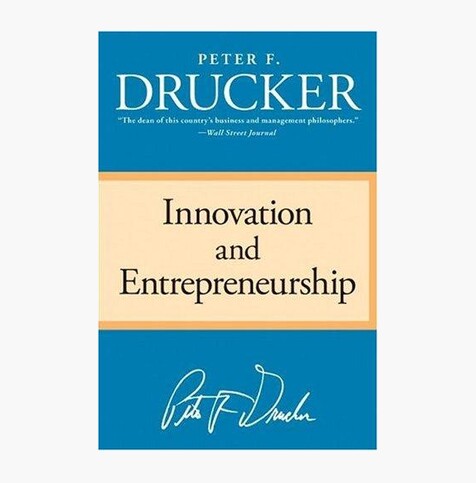
from Peter F. Drucker
Innovation and Entrepreneurship by Peter F. Drucker is considered the foundational work on modern entrepreneurship, originally published in 1985 but whose principles remain relevant decades later. Drucker, the father of modern management, transcends the romantic myths of entrepreneurship to present a disciplined and systematic view of how organizations can innovate deliberately. This essential book demonstrates that innovation is not a mystery or an innate talent, but a practice that can be learned, organized, and managed. Through deep analysis and concrete business cases, Drucker reveals the systematic sources of innovative opportunities and provides a robust conceptual framework for entrepreneurs and executives. A must-read for those seeking to understand the essence of entrepreneurship as an organizational discipline and wishing to apply these timeless principles in contemporary business contexts.
BOOK SUMMARY
Peter F. Drucker approaches innovation and entrepreneurship from a unique perspective: as systematic and manageable organizational disciplines, not as acts of genius or luck. The book is divided into two main parts: "The Practice of Innovative Entrepreneurship" and "The Policies of Innovative Entrepreneurship".
Key Concepts:
Drucker demonstrates that entrepreneurship is not irrational risk-taking, but concentrated effort based on systematic analysis of opportunities and calculated risks.
WHY I RECOMMEND READING THIS BOOK? By Francisco Santolo
This book is fundamental in my entrepreneur's library and is one of the texts I most recommend to those beginning their journey in the business world. What differentiates Drucker from other authors is his intellectual rigor and his rejection of the emotional rhetoric that often surrounds entrepreneurship. Instead of promises of easy success, Drucker offers a thinking framework that demands discipline, analysis, and systematic work.
Personally, the concept of the "seven sources of innovative opportunities" transformed my way of identifying business possibilities. Instead of waiting for moments of divine inspiration, I learned to systematically analyze my environment for opportunity signals. This approach has allowed me to found multiple companies with greater strategic clarity and less dependence on pure intuition.
The book is also invaluable for growing entrepreneurs who face the challenge of maintaining an entrepreneurial spirit as their organizations become more complex. Drucker's ideas about organizational structures for innovation have been particularly useful in my work with Scalabl, where we seek to create ecosystems that sustain continuous entrepreneurship.
RELATED BOOKS
1. "Management" by Peter F. Drucker - The author's definitive work on general management, where many of the concepts presented in this book are more extensively developed.
2. "The Effective Executive" by Peter F. Drucker - Perfectly complements this reading by focusing on the individual effectiveness practices that every entrepreneur must develop.
3. "Zero to One" by Peter Thiel - Although more contemporary and with a focus on technology startups, it offers a complementary view on how to create truly innovative companies in the 21st century.