
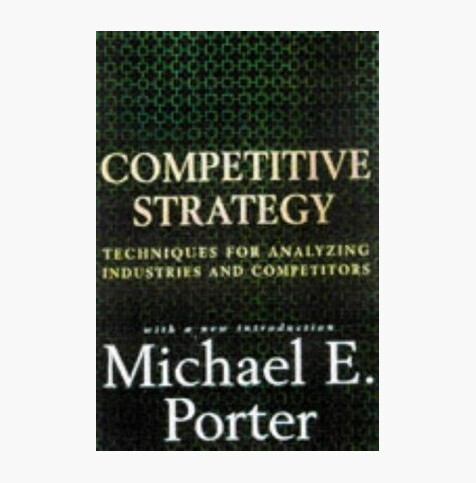
from Michael E. Porter
"Competitive Strategy" by Michael E. Porter, published in 1980, is the foundational work that established the modern paradigm of business strategic analysis. This introductory book to the field of competitive strategy has become required reading in the world's top business schools. Porter presents a systematic framework for analyzing industry structure and competition, introducing concepts that are now part of universal business language: the Five Competitive Forces. The work addresses fundamental questions such as why some industries are inherently more profitable than others, how industry structure determines the competitive position of companies, and what strategies allow companies to successfully navigate different competitive contexts. For anyone seeking to understand the rules of the game in business, this book offers the analytical tools necessary to evaluate opportunities, threats, and strategic positioning.
BOOK SUMMARY
Key Concepts:
1. The Five Competitive Forces: Analytical framework for understanding industry structure:
- Rivalry among existing competitors
- Threat of new entrants
- Bargaining power of suppliers
- Bargaining power of buyers
- Threat of substitute products
2. Generic Strategies: Three basic approaches for positioning in an industry:
- Overall cost leadership
- Overall differentiation
- Focus (on cost or differentiation)
3. Competitor Analysis: How to predict competitive behavior and design effective strategic responses.
4. Industry Structure: How economic, technical, and regulatory factors determine competitive intensity and profitability.
WHY I RECOMMEND READING THIS BOOK? By Francisco Santolo
I read this book early in my career as an entrepreneur and it changed how I evaluate markets. Before Porter, I looked at opportunities thinking only about the product: if it was good, the market would come. The Five Forces made me understand something uncomfortable: there are industries where the best product in the world won't save you if the structure crushes you. Customers with too much power, nonexistent barriers to entry, cheap substitutes. It doesn't matter how hard you work.
At Scalabl, when we evaluate a startup for investment, the first thing we do is an industry structure analysis. We don't ask "is it a good product?" but rather "can this business defend its margins in 5 years?" That question comes directly from Porter.
There's something the book doesn't resolve well: industries that don't exist yet. Porter analyzes established sectors, but if you're creating a new category — like Airbnb or Uber did — the five forces don't tell you much at first. For that you need to complement it with Christensen or Blue Ocean Strategy. Porter gives you the foundation; you build the rest on top.
What I value most is an idea that seems obvious but that most entrepreneurs ignore: strategy is choosing what NOT to do. You can't be the cheapest and the most premium and the most focused at the same time. Choosing hurts, but not choosing is worse — you end up in what Porter calls "stuck in the middle," which is where most companies I know go to die.
The book is dense and academic. It's not a weekend read. But if you work through it patiently, you'll see competition through different eyes. And for a founder, that's worth more than any growth hack.
RELATED BOOKS
"Competitive Advantage" by Michael E. Porter - The sequel that delves deeper into how to create and sustain specific competitive advantages within the industry.
"The Innovator's Dilemma" by Clayton Christensen - Complements Porter by showing how industries transform and why established companies fail in the face of disruption.
"Competing Against Luck" by Clayton Christensen - Offers a modern perspective on strategy centered on the customer's "job to be done."