
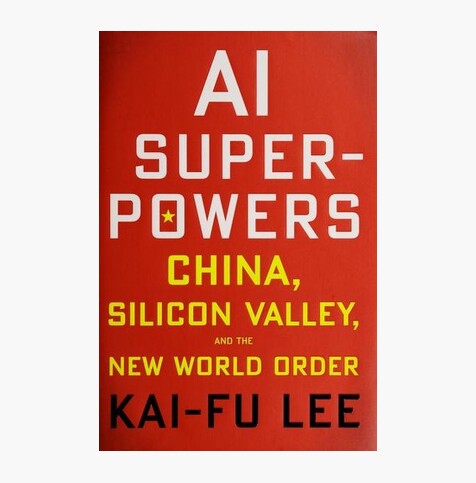
from Kai-Fu Lee
Will the United States or China dominate the era of artificial intelligence? Kai-Fu Lee, former president of Google China and one of the world's foremost AI experts, offers a unique perspective from inside both ecosystems. With a Ph.D. from Carnegie Mellon and executive experience at Apple, Microsoft, and Google, Lee argues that China is not just catching up to Silicon Valley, but in some aspects has already surpassed it. This book is an essential map for understanding the geopolitical competition that will define the 21st century.
"In deep learning, there's no data like more data. The more examples of a given phenomenon a network is exposed to, the more accurately it can pick out patterns and identify things in the real world." — Kai-Fu Lee
BOOK SUMMARY
Lee structures the book around a central thesis: while the U.S. leads in fundamental AI research, China is winning in implementation, data, and execution speed. The competition is not merely technological; it will reconfigure economies, labor markets, and global power structures.
The four waves of AI:
1. Internet AI (2010-2020): Personalized recommendations, search, targeted advertising. Here Silicon Valley initially led, but China quickly caught up and surpassed in applications like mobile payments (WeChat Pay, Alipay) and super-apps.
2. Business AI (2015-2025): Automation of business decisions, finance, insurance, medical diagnosis. China has advantage due to greater amount of available data and fewer privacy regulations.
3. Perception AI (2018-2030): Facial recognition, computer vision, smart sensors. China dominates due to its vast camera network, IoT infrastructure, and cultural acceptance of surveillance.
4. Autonomous AI (2020+): Autonomous vehicles, robots, drones. Open competition where China's manufacturing ecosystems may provide decisive advantage.
Factors favoring China:
Factors favoring the U.S.:
The employment dilemma:
Lee predicts AI will eliminate between 40-50% of jobs in developed and emerging economies. Not just manual labor: radiologists, traders, translators, journalists, contract lawyers. The speed of this disruption will be unprecedented.
His proposal: Don't resist technology, but reimagine the social contract. Focus on jobs where humans are irreplaceable: empathy, creativity, personal care. Redistribute wealth generated by AI through robot taxes and universal basic income.
WHY I RECOMMEND READING THIS BOOK? By Francisco Santolo
This book is mandatory for anyone wanting to understand the current global landscape. Lee isn't an outside observer; he's been at the center of both ecosystems as an executive at Google, Microsoft, and Apple, and as an investor in China through Sinovation Ventures. His dual perspective is rare and valuable.
I especially recommend it because it dismantles Silicon Valley arrogance. For decades, the U.S. assumed its technological leadership was unquestionable. Lee demonstrates that China isn't just an imitator; in many aspects it's an innovator. The "copycat" mentality no longer applies. Chinese execution speed in practical AI applications leaves many American startups in the dust.
The concept of "market mentality vs. mission mentality" made me rethink how we evaluate entrepreneurship. In the West we glorify "passion" and "purpose"; in China they glorify profitability and speed. Both approaches have merits, but Chinese flexibility to pivot quickly and monetize is critical learning.
The warning about massive unemployment isn't distant science fiction. It's already happening in manufacturing, retail, transportation. Lee isn't a luddite; he knows AI will create new jobs. The problem is speed: job destruction will occur faster than job creation, generating a decade of social dislocation.
For entrepreneurs, investors, or business leaders, this book offers a framework for navigating the transition. Ignoring China's rise in AI is a strategic risk few companies can afford.
RELATED BOOKS
"Life 3.0" by Max Tegmark
A more philosophical exploration of the long-term implications of AI, including the possibility of artificial general intelligence (AGI). Tegmark examines scenarios ranging from utopian to existential.
"The Second Machine Age" by Erik Brynjolfsson and Andrew McAfee
The broader economic context of automation and digitization. Explains how technology is reshaping the global economy and what policies might mitigate growing inequality.
"Superintelligence" by Nick Bostrom
For those wanting to delve into the existential risks of advanced AI. Bostrom analyzes how an intelligence surpassing humans could escape our control.